About Serenity Lewis
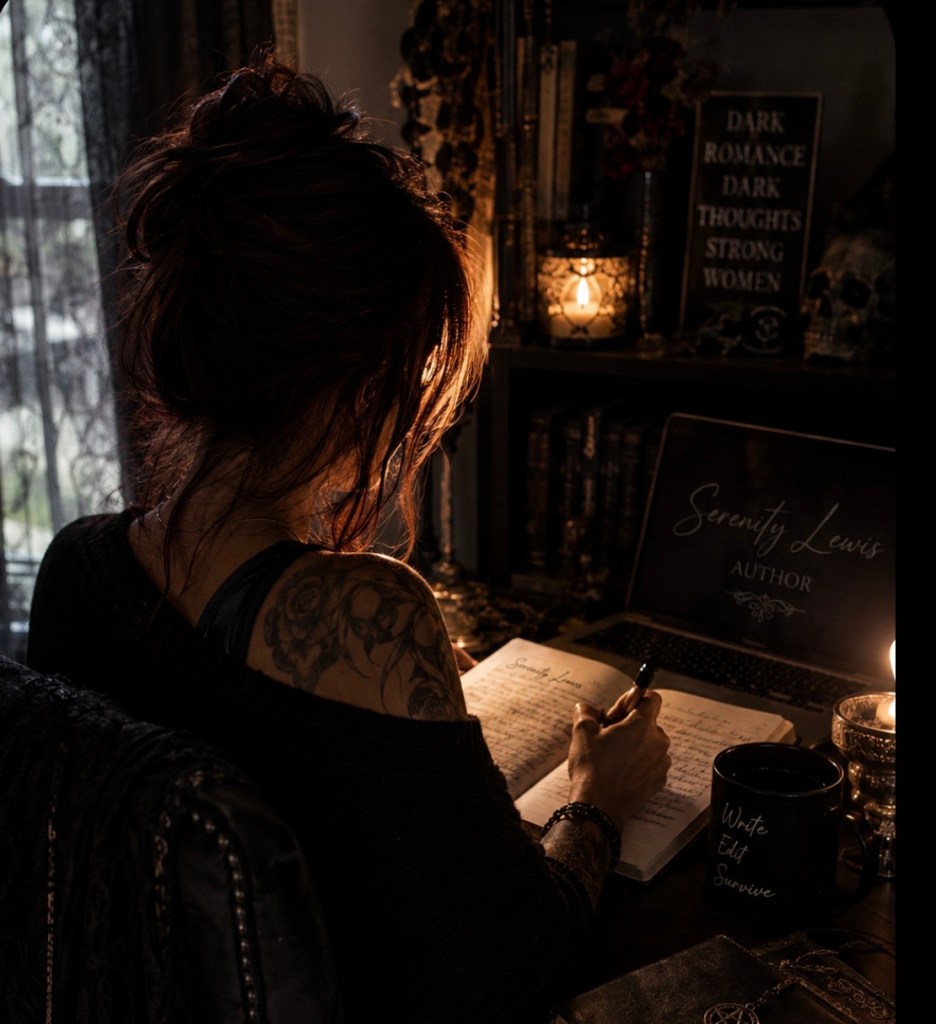
Who is the Woman in the Shadows?
I didn’t begin writing because I had a publishing plan. I began writing because I had something I needed to understand.
I’m a woman with a life that rarely fits neatly into one category. I’m a mother and dog mom, a paramedic and a therapist, a writer, and a perpetual student of human behavior. I can be perfectly happy spending an afternoon knitting or baking and equally happy hiking or dragging myself through an obstacle course race.
That collection of seemingly contradictory interests probably explains a lot about my writing. I’ve never been particularly interested in people who fit neatly into boxes.
Why I Write in the Shadows
When I first began writing, I chose a pen name partly to create distance between my personal life and the real experience that inspired some of my earliest work. As my writing evolved, that separation began serving another purpose.
My stories increasingly explored subjects that don’t always fit comfortably within social expectations- sexuality, BDSM, unconventional relationships, alternative identities and beliefs, stigma, trauma, and the complicated ways people love one another. Writing under a pen name gave me the freedom to explore those subjects while protecting myself from some of the judgement and backlash I feared might follow them.
Over time, however, the reason I remained Serenity Lewis changed.
As a therapist, I believe the boundaries surrounding the therapeutic relationship matter. My clients deserve a space centered on their experience rather than unnecessary access to the private, creative, or personal parts of mine. Keeping my author identity separate helps me protect those boundaries and reduces the possibility that my fiction- or assumptions about the experiences that may have inspired it- could unnecessarily affect a client’s therapeutic experience.
But Serenity Lewis is no longer simply a name I use to remain anonymous.
She has become an established part of my work, my creativity, and my identity. Serenity Lewis is the author who explores subjects I believe deserve space on the page. She has her own body of work, her own audience, her own voice, and her own purpose.
I don’t experience those identities as competing versions of myself. I am one integrated person who occupies different roles, and not every part of me belongs in every room.
Serenity Lewis belongs here.
And this is where I write in the shadows.
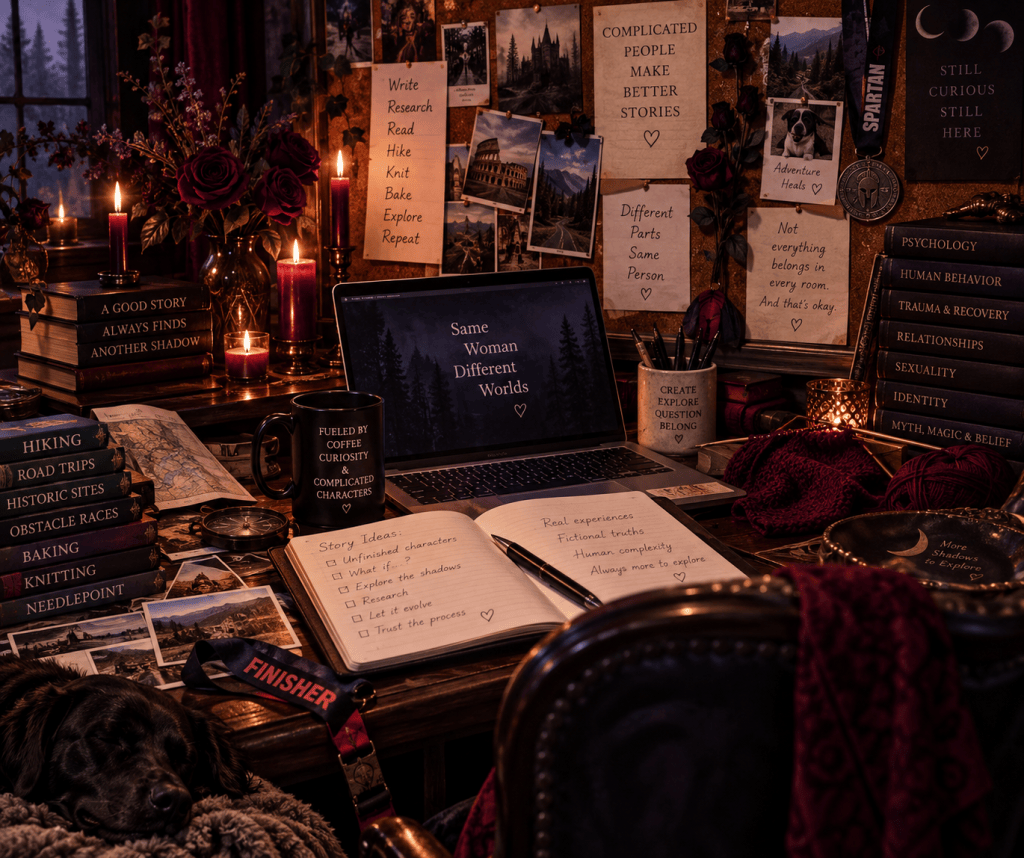
Psychology, Research, and Storytelling
My professional work has given me a deep interest in human behavior, but psychology doesn’t enter my fiction because I want to diagnose my characters.
It enters because I want to understand them.
Attachment, trauma, identity, stigma, emotional regulation, sexuality, consent, relationship structures, coping, and the ways people learn to protect themselves can profoundly shape how human beings experience relationships. I use psychological concepts to help guide character development and explore how those processes might actually feel when they are happening between imperfect people.
Sometimes that means a character knows exactly why they’re behaving the way they are and does it anyway. Sometimes they don’t understand themselves at all.
That’s human.
My goal isn’t for readers to finish one of my novels believing they’ve read a psychology textbook. I want them to recognize something- a thought they’ve had, a relationship they’ve struggled to understand, a contradiction they’ve carried, or a part of themselves they’ve wondered whether anyone else would understand.
If a reader closes one of my books feeling a little less alone in something they thought only they experienced, then the psychology has done exactly what I wanted it to do.
Behind the Pen
There is no single way a Serenity Lewis story gets written.
Sometimes I begin with an outline, character arcs, research, and a reasonably convincing belief that I know exactly where the story is going.
Other times, I start writing and see what happens.
Neither method has ever prevented my characters from eventually ignoring the plan.
Real experiences and observations sometimes provide the smallest grain of inspiration, which is then fictionalized into something entirely different. Other stories, characters, and events are complete inventions. Once the writing begins, however, the story inevitably evolves. Characters develop motivations I hadn’t anticipated. relationships change. Themes become more important than I expected. Endings move.
Somehow, the finished story almost never ends exactly where I thought it would.
I have learned to let it.
Apparently, even I don’t get to decide exactly what is waiting in the shadows until I get there.
 Serenity Lewis Author